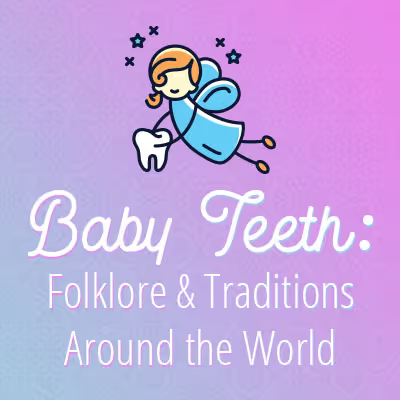
Baby Teeth: Folklore & Traditions Around the World
What parents do with their children’s baby teeth varies from family to family. Some save them, some throw them away, some make a craft project or a keepsake from them. Recent research is even exploring the possibility of having parents store their children’s baby teeth to preserve mesenchymal stem cell content in the event the child develops cancer or certain other illnesses in their future. Just for fun, Drs. Jeff and Candy McComb want to discuss some history of baby tooth traditions around the world.Baby Teeth Rituals Throughout HistoryEvery human culture in documented history included rituals around disposal of a child’s lost baby teeth. Researchers in the early 20 th century summarized them to include: The tooth was thrown into the sun or between the legs The tooth was thrown onto or over the roof of a house, often while saying a prayer or singing a song to some individual or animal The tooth was placed in a mouse hole near the hearth or offered to another animal The tooth was hidden where animals could not get at it The tooth was placed on a wall The tooth was “planted” in a tree, garden, or field, with the idea a new tooth would then grow in the child’s mouth to replace it The tooth was thrown into a fire to prevent a witch or other malevolent force from cursing or gaining any power over the child The tooth was swallowed by the mother, the child, or an animal The most commonly practiced ritual—recorded from Mexico to Russia to New Zealand—was to offer the lost baby tooth as a sacrifice to a mouse (or rat) with the hope the child’s adult teeth would be as strong as the rodent’s, usually accompanied by a prayer or song. Another strong-toothed animal could be substituted for mice or rats according to research, which revealed similar ceremonies that incorporated cats, squirrels, beavers, or dogs—but the mouse remained the most common by far. Ever Heard of the Tooth MOUSE? In many countries around the world, children still believe in the Tooth Mouse. Spain, Guatemala, Venezuela, Colombia, Peru, Chile, and Mexico put lost teeth under pillows, expecting money or gifts left by “El Ratoncito Perez” or several variations that translate to “mouse who collects teeth.” Kids in Argentina leave their teeth in a glass instead, still expecting a visit by a magical, thirsty rodent who leaves a treasure while they sleep. In France and Switzerland, La Petit Souris (“Little Mouse”) is the name of the rodent that whisks away discarded baby teeth for cash or candy. In South Africa, the tooth is left in a slipper for the Tooth Mouse, who leaves a gift behind. Other countries who offer their baby teeth to the Tooth Mouse during the night expect nothing in return but the guarantee of a strong, healthy new tooth in their future. Where Did the Tooth Fairy Come From? Researchers believe modern-day “ tooth fairy ” customs—observed by the United States, Canada, England, Australia, and Denmark—combine the “tooth mouse” myth with the idea of a “good fairy”—a concept from English children’s literature and expanded on by media like Disney movies. The motif of relationships and financial exchanges between people and benevolent fairies has been around for many years, but the idea of a tooth fairy has likely persisted as a source of comfort to kids who could be a little scared by losing their teeth. (We understand that fear here at Explorer Kids Dental!) It’s a Bird, It’s a Plane, It’s… A Tooth? In Greece, Vietnam, Singapore, India, Sri Lanka, and China, children throw their baby teeth on the roof when they fall out. Kids in Greece wait for a mouse or pig to retrieve it, young Sri Lankans await a squirrel, while in India, anticipation is for the return of a sparrow bearing a new tooth.CherokeeIndian children throw the tooth on the roof, repeating, “Beaver, put a new tooth in my jaw!” four times. In parts of Africa, children throw lost upper teeth on the roof and bury lost lower teeth in the ground. The reverse is true in East Asia, where lower teeth are thrown on the roof and upper teeth are buried, thrown on the ground, or hidden under the bed.In some MiddleEastern countries such as Iraq, Jordan, and Egypt, kids are encouraged to toss their teeth up toward the sky. Brazilian children throw teeth outside for birds, who they believe will only take them if they are clean, while kids in El Salvador expect a rabbit to swipe their tooth, regardless of its cleanliness. Give a Dog a Tooth Throughout Central Asia, baby teeth might be put into fat and fed to a dog with the wish that the child’s replacement tooth will be as strong as the dog’s. If there is no dog available, the teeth are buried near a tree so that the new tooth will have strong roots.SomeAlaskan tribes also feed baby teeth to a dog with similar intentions.Family Jewels Some CentralAmerican countries fashion jewelry from lost baby teeth, a tradition said to originate from ancient Viking customs where articles belonging to children were regarded as powerful, good luck, and sometimes carried into battle. …Or a Family Tree The children of the Yellowknives Dene First Nation tribe of Canada give lost teeth to their mother or grandmother, who place the tooth in a tree. The family then dances around the tree together to encourage the tooth to grow in as straight as the trunk. Food for thought, huh? Contact Explorer Kids Dental in Roseville today so we can take the best care of your little one’s baby teeth… we’ll let you decide what to do with them when they fall out! The content of this blog is not intended to be a substitute for professional medical advice, diagnosis, or treatment. Always seek the advice of qualified health providers with questions you may have regarding medical conditions. Explorer Kids Dental 920 Pleasant Grove Blvd. #150 Roseville, CA 95678 (916) 269-9777
Share this post
Explore more blogs
April 13, 2021
Is My Child's Oral Hygiene Routine Sufficient?
When you're just getting started with your child's oral hygiene, you may have a lot of questions. Here's what you need to know.
March 27, 2021
Why Haven't My Child's Permanent Teeth Come In?
If your child's permanent adult teeth haven't emerged in a timely manner, you may wonder if there is a reason to worry. Here are a few possible reasons.

March 13, 2021
Why Are My Baby's Teeth Stained?
It is not uncommon for a child's teeth to appear less than pearly white. Here's what causes staining and what you can do about it.
February 27, 2021
Late for an Important Date: When Baby Teeth Don't Fall Out
Sometimes baby tooth loss doesn't happen in the usual order, and an over-retained baby tooth can cause complications.
February 13, 2021
Zirconia Crowns for Kids
In 2010, zirconia became available for use in pediatric dentistry as a durable, biocompatible crown option for children.

January 27, 2021
Help Your Little Superhero Fight Bad Breath Bugs
Explorer Kids Dental discusses what causes bad breath in children and how to fight it effectively.
January 13, 2021
Should I Let My Teen Whiten Their Teeth?
Here's what parents should know about teen teeth whitening — what's safe, what's not, and when to wait.
December 27, 2020
Take it Easy After Tooth Extraction
Sometimes we recommend extraction to get kids back on track. Here's what to expect for aftercare following a tooth extraction.

December 13, 2020
Do You Smooch Your Pooch?
There's a common misconception that a dog's mouth is cleaner than a human's mouth. As it turns out, that's not true at all.
November 27, 2020
How to Choose the Right Pediatric Dentist for Your Child
Being the parent of a little one means making a lot of decisions each day. How do you choose the right pediatric dentist? Here's what to look for.
November 13, 2020
Xylitol: Is it Safe for Kids?
Xylitol is a naturally-occurring substance used as an FDA-approved artificial sweetener that can also assist in the prevention of tooth decay.