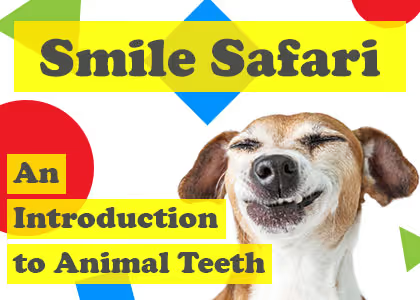
Smile Safari: An Introduction to Animal Teeth
If you and your child are the proud companions of a pet, there’s a good chance you’ve both thought or said something like: “Fluffy’s really living the life. Instead of having to go to school or do chores, they can relax and sleep all day, getting up only to eat or maybe chase a laser if they’re feeling feisty.” However, Fluffy also doesn’t have to floss and brush their teeth, so how do Fluffy’s teeth manage not to suffer from disease and decay? Contemplating this may lead you and your little one to wonder about all kinds of different animal mouths and how they remain clean and strong.Drs. Jeff & Candy McComb of Explorer KidsDental happen to love talking about teeth of all types, so keep reading to go on a toothy smile safari!Myth BustingBefore we start listing fun facts about animal teeth of different species, we’ll answer the question we asked first about Fluffy’s teeth seeming impervious to decay. The myth that dogs have cleaner mouths than humans has existed for some time even though they lick themselves daily and have an affinity for things as yucky (and potentially toxic) as soiled kitty litter. Our mention of these particular habits and the word myth probably clues you into the truth, but we’ll explain in more detail. Human mouths are home to anywhere from 650 to 1,000 different types of bacteria at any given moment, while the number of bacteria in the mouth of a dog may hover around 600. On its own, this fact might make you believe that pervasive myth, but diets and the types of bacteria are important to keep in mind. Dogs shouldn’t be ingesting sugar the way many humans do, making cavities less likely to form in their teeth, but both humans and dogs are likely to develop gum disease without a solid oral hygiene routine . Doggy Dental Care You read right—canine friends need help cleaning their mouths to prevent periodontal disease (the advanced form of gum disease), which can lead to tooth loss. You can softly brush your buddy’s teeth and gums with a toothpaste meant for dogs, as toothpastes meant for humans can contain ingredients like xylitol , which is very harmful to your beloved pooch. Giving them treats with the seal of approval from the Veterinary Oral Health Council is helpful, too! And be sure not to smooch your pooch on the mouth, as harmful bacteria can be transferred easily! Mothers, lovers, and dogs are the most common sources of gum disease infections. If you’re curious about your feline friend, research suggests their oral bacteria is very similar to a dog’s.One big distinction between their mouths is the tongue.Why do cats have rough barbs (known as papillae ) on their tongues? Simple—they help remove dirt, debris, and loose hair from their coat, but their primary function is to scrape flesh from their prey’s bones—they’re animals after all, even if we’ve domesticated them. A look at their diets (or what their diets would be if they weren’t our sweet housemates) brings us back to the topic of animal teeth!Sharp or Dull, Long or Short, Numerous or Few?The different types of teeth you’ll find in an animal’s mouth provide clues on what they eat! Can you imagine a cow’s mouth with teeth like a dog’s? That wouldn’t be helpful for them to chew grass, leaves, and other plant matter, which is why you’ll find rows of flat, wide teeth in the mouths of herbivores (plant-eaters) like horses, camels, cows, sheep, and goats. The jaws of these animals are also capable of moving sideways, which helps them grind the food between their molars for healthy digestion. When it comes to the mouths of carnivores (meat-eaters), you’ll find a mouthful of long, pointed (sharp) teeth that help lions, tigers, foxes, wolves, and the Tyrannosaurus Rex (testing to be sure you’re still with us), grip and cut the meat of their prey. Flat teeth meant for chewing aren’t necessary for these eaters, because they’re able to swallow and digest larger chunks of food. If an animal eats both meat and plants, they can be referred to as an omnivore and will have a combination of sharp and flat teeth for their varied diet. Teeth as Tools While Drs. Jeff & Candy McComb strongly advises you and your child stick with using your teeth for speaking, eating, and smiling, there are animals that can use their teeth for other activities. For example, elephant tusks are actually teeth, and they use them both defensively and like hands as they lift and carry objects, and even dig with them. If they lose a set of tusks, they can grow replacement tusks up to six times in their lives. If you think that’s incredible, wait ‘til you read about shark teeth! Sharks lose teeth each week! They’re not attached to gums like human teeth and may break or come out clean when they’ve chomped into their prey. Luckily for sharks, they can grow a replacement tooth within a day of losing one. This leads to the phenomenal presence of over 20,000 teeth in one shark’s lifetime! There are so many astounding facts to learn about the animals we share a planet with, and we love to share what we know with our young (and not so young) visitors. Unlike elephants and sharks, you and your little one are given just one set of permanent teeth. We’re here to help ensure they’re healthy for a lifetime of happy smiles, so contact your Roseville dentist at Explorer Kids Dental today to schedule a checkup ! The content of this blog is not intended to be a substitute for professional medical advice, diagnosis, or treatment. Always seek the advice of qualified health providers with questions you may have regarding medical conditions.
Share this post
Explore more blogs

October 27, 2022
5 Easy-to-Make Halloween Snacks for Healthy Teeth
Halloween means class parties, trick or treating, and an all-around day full of sugar. There are plenty of healthy and fun ways to celebrate.
October 13, 2022
Pediatric Oral Health FAQ
The Explorer Kids Dental team knows parenting is equal parts rewarding and exhausting. Here are answers to frequently asked questions about pediatric oral health.
September 27, 2022
Does My Child Need a Dental Crown?
Baby teeth are important because they save space for adult teeth and help kids learn to speak, bite, and chew. Sometimes dental crowns are needed.
September 13, 2022
The Discovery of X-Rays
X-rays are now so frequently used we take them for granted. Here's the fascinating story of their discovery and use in dentistry.
August 27, 2022
Does Your Child Have Painful Sores in Their Mouth? This Virus Could be the Cause
Have you heard of Hand, Foot, and Mouth Disease? Despite being a relatively common virus, it's one that makes a lot of parents confused.

August 13, 2022
Benzocaine is Not Safe for Teething!
Benzocaine has been an over-the-counter local dental anesthetic for many years but its use has been linked to a rare but serious condition.
July 27, 2022
Ages & Stages: Kids & Oral Hygiene
At-home oral hygiene routines are the most effective tool but tricky with pediatric patients. Here's what to do at each age.

July 13, 2022
Does Your Child or Teen Experience Chronic Headaches? Chewing Gum Might be to Blame
There are a lot of myths about chewing gum. Explorer Kids Dental wants to clear up whether chewing gum can cause chronic headaches in kids and teens.
June 27, 2022
Lidocaine is Not for Kids
The FDA issued a warning that oral viscous lidocaine should not be used to treat teething pain in infants and young children.
June 13, 2022
A Dental First Aid Kit for Kids
With active kids who run, play, and climb, emergency dental injuries can happen. Here's what to include in a dental first aid kit.
May 27, 2022
This Tool Can Help Your Child Floss Like a Boss!
Getting string in between a child's teeth is a challenge. Explorer Kids Dental shares a helpful flossing tool for kids.