
Can People Really Have Soft Teeth?
In many fields of science there is folklore mixed with scientific facts. Stories and beliefs handed down from previous generations can permeate the way we still talk about and understand things. One of these myths is ‘having soft teeth’. Explorer Kids Dental hear it at least once a day: “I’m sorry doc, I just have soft teeth!” Or “Everyone in my family has soft teeth.” Here’s the thing, teeth are made of a very hard structure called enamel. Enamel does not grow in ‘soft’. Let’s take a closer look at what it really means to have soft teeth. Enamel Isn’t Soft Enamel is the hard-mineral structure that makes up the outermost layer of the tooth crown. It is mainly comprised of hydroxiapetite, calcium and phosphate. It is the hardest structure in the body — even harder than bone.It cannot be “soft.”What people mean when they say they have soft teeth In rare cases the enamel does not develop properly and can erupt with small holes (pits and fissures) or be thin or underdeveloped. Developmental Dental Defect (D3) is also known as Enamel Hypoplasia. They say this developmental problem affects 1 in 14,000 people in America.People with diagnosed EnamelHypoplasia will have small teeth, discolored teeth, holes and indentations in the teeth when they emerge. Most people that tell us they have ‘soft teeth’ do not suffer from Enamel Hypoplasia. When people tell us they have soft teeth, they usually mean they feel more susceptible to dental decay. They likely have experienced many diagnoses of cavities and believe it’s because of soft teeth. The problem with blaming soft teeth is patients disregard or miss what may put them at risk for tooth decay. Real Risk Factors for Tooth Decay According to the American Dental Association , these are the primary risk factors for tooth decay: Sugary Foods or Drinks: Bottle or sippy cup with anything other than water at bedtime (ages 0 to 6 years) or frequent or prolonged between meal exposures/day (ages >6 years) Eligible for Government Programs: WIC, Head Start, Medicaid or SCHIP (ages 0 to 6) Caries Experience of Mother, Caregiver and/or other Siblings: Carious lesions in the last 6 months (ages 0 to 14 years) Special Health Care Needs: developmental, physical, medical or mental disabilities that prevent or limit performance of adequate oral health care by themselves or caregivers (ages 0 to 14 years) Chemo/Radiation Therapy (ages >6 years) Visual or Radiographically Evident Restorations/Cavitated Carious Lesions: Carious lesions or restorations in last 24 months (ages 0 to 6 years) Noncavitated (incipient) Carious Lesions: New lesions in the last 24 months (ages 0 to 6 years) Cavitated or Noncavitated (incipient) Carious Lesions or Restorations (visually or radiographically evident): 3 or more carious lesions or restorations in last 36 months (ages >6 years) Teeth Missing Because of Caries: Any (ages 0 to 6 years) or in the past 36 months (ages >6 years) Severe Dry Mouth (Xerostomia; ages >6 years) or Visually Inadequate Salivary Flow (ages 0 to 6 years). Notice, soft teeth are nowhere on the list, neither is Enamel Hypoplasia. Instead of blaming soft teeth, patients should pay attention to the items listed by the ADA and considering if any apply — if so, what they can do about it.Treating Tooth DecayThe great news is your dental team is educated and equipped to help you better understand what is causing your dental decay. We can assess your medications, behaviors and diet and help come up with a plan to mitigate your risk of decay. It’s important for our patient to understand the real reason they are getting cavities so we can work together to get your mouth healthy. If you have decay, its paramount you clean out the decay and restore the tooth or teeth to function first. We have all the restorative methods you might need, right here in-office. If you struggle with tooth decay, let us help you figure out what is causing it. Once we know the cause we can plan to help you prevent decay. Call Explorer Kids Dental today! We do not intend the content of this blog to be a substitute for professional medical advice, diagnosis, or treatment. Always seek the advice of qualified health providers with questions you may have regarding medical conditions.
Share this post
Explore more blogs
April 13, 2019
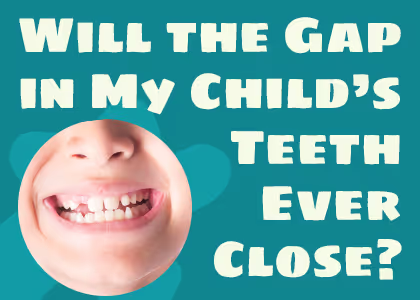
Will the Gap in My Child's Teeth Ever Close?
Diastema is the medical name for a space or gap between two teeth. A gap can occur between any two teeth. Here's what to expect.