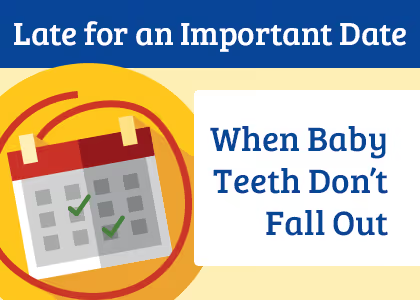
Late for an Important Date: When Baby Teeth Don't Fall Out
Most kids lose their baby teeth—also called primary teeth—in a distinct sequence at set intervals. Children’s baby teeth come out naturally starting around age six, becoming progressively looser as they fall out (sometimes with a little extra wiggling because the Tooth Fairy is expected to visit). Sometimes baby tooth loss doesn’t happen in the usual order, and a permanent tooth appears prior to the loss of the primary tooth, which leads to a double row of front teeth. While this is a common pediatric dental concern that should be addressed, it is no cause for alarm and rarely has long-term negative effects. When the loss of a primary tooth and subsequent eruption of a permanent tooth takes over a year longer than the anticipated date, that primary tooth is considered over-retained . Are you concerned because your child’s baby tooth isn’t falling out, or the permanent tooth hasn’t appeared yet? Roseville dentist, Drs. Jeff and Candy McComb , discusses over-retained baby teeth and possible treatment options below.Baby Teeth Need AssessmentBaby teeth should be checked routinely by a dentist so abnormalities can be identified and treated early for your child’s long-term oral health and comfort. The first step when assessing a child’s over-retained baby tooth is a comprehensive oral examination that includes a thorough exam with digital x-rays . Condition, color, shape, and position of the over-retained tooth must be evaluated in case it is fused to the bone, a condition known as ankylosis . When ankylosis occurs, the affected tooth appears sunken in the gums and is unable to come out on its own.What Are Some Causes Over-Retained Baby Teeth?The most common cause for an over-retained primary tooth is the absence of a permanent tooth to take its place. When the baby and permanent teeth are developing as they should, the permanent tooth will push on and eventually dissolve the primary tooth root, facilitating its loss so the permanent tooth can take its rightful place in the jaw. In up to 7% of cases, permanent teeth are absent, which occurs more frequently in girls than boys. Other possible causes for over-retained primary teeth include obstruction, trauma, infection, environmental factors, endocrine disorders, genetics, and misalignment or delayed eruption of the permanent tooth underneath. What are the Risks of Not Treating Over-Retained Baby Teeth? Over-retained primary teeth can lead to other serious dental issues later, which is why early assessment and treatment is beneficial. Periodontal (gum) problems, cavities , and misalignment of adjacent permanent teeth can occur if over-retained baby teeth are left untreated.Treatment Options for Over-Retained Baby TeethThe condition of the over-retained tooth or teeth and the surrounding structures of the mouth determine the best treatment for your little one. If the child has several over-retained teeth, it is likely that several permanent teeth below are missing. If this is the case, an orthodontist should evaluate your child in addition to your dentist so an acceptable treatment solution can be carefully planned and executed for optimal end results. If the over-retained baby tooth is structurally strong and satisfactory in appearance, that tooth can be retained. If the tooth is strong but looks unattractive, its aesthetics can be improved with a dental restoration. If the primary tooth is crooked, extraction is the best option for two reasons: 1) the gap can be closed later with orthodontic treatment; or 2) an absent tooth can be replaced with a fixed bridge or dental implant. A dental implant is currently the superior option due to aesthetics, functionality, jawbone health, and higher rates of success. If you have questions or concerns about your child’s over-retained baby teeth, your Roseville dentist at Explorer Kids Dental would be happy to welcome you and your child for examination and treatment. We’d love to hear from you— contact us today ! The content on this blog is not intended to be a substitute for professional medical advice, diagnosis, or treatment. Always seek the advice of qualified health providers with questions you may have regarding medical conditions.
Share this post
Explore more blogs
April 13, 2020
Silver Diamine Fluoride: An Affordable Filling Alternative
Silver diamine fluoride (SDF) is an antibiotic topical liquid solution brushed onto teeth to halt the progression of tooth decay.
March 27, 2020
Oral Cancer – Prevention & Early Detection
Oral cancer affects approximately 50,000 Americans every year. Early detection is key to successful treatment.
March 13, 2020
Is My Child's Loose Tooth Causing Them Pain?
As teeth push their way through gum tissue, your little one will likely be sensitive and in pain. Here's what to do.
February 27, 2020
Are Baby Bottles Bad for Baby Teeth?
Tooth decay in infants and very young children is often called baby bottle tooth decay. Here's what causes it and how to prevent it.

February 13, 2020
Social Stories: Support for Kids with Autism
Social Stories help provide emotional support to autistic kids with the goal of improving their dental and other experiences.
January 27, 2020
Can Children Get Receding Gums?
Receding gums are not uncommon in adults, but children can also experience this progressive loss of gum tissue as young as age 7.

January 13, 2020
Grandparents, Grandkids & Dental Care
Grandparents today are often very involved in the daily lives of their grandchildren. How much has dentistry changed since they were kids?
December 27, 2019
Sports Drinks & Energy Drinks: Proceed with Caution
The American Academy of Pediatrics is cautioning parents that sports and energy drinks have similar effects on children's teeth as soda.
December 14, 2019
What Are Maxillary Teeth?
The upper teeth formed along the maxillary jawbone include the top incisors, molars, premolars, and canines. Here's what you need to know.
November 27, 2019
What's a Pulpotomy? Pain Relief for Tiny Teeth
When the pulp becomes inflamed or infected in a baby tooth, a pulpotomy may provide relief. Here's how it works.
November 13, 2019
Teaching Your Kids to Brush & Floss
Your child's first unassisted brushing and flossing session is a milestone. Here's how to get them ready for it.