Late for an Important Date: When Baby Teeth Don't Fall Out
Most kids lose their baby teeth—also called primary teeth—in a distinct sequence at set intervals. Children’s baby teeth come out naturally starting around age six, becoming progressively looser as they fall out (sometimes with a little extra wiggling because the Tooth Fairy is expected to visit). Sometimes baby tooth loss doesn’t happen in the usual order, and a permanent tooth appears prior to the loss of the primary tooth, which leads to a double row of front teeth. While this is a common pediatric dental concern that should be addressed, it is no cause for alarm and rarely has long-term negative effects. When the loss of a primary tooth and subsequent eruption of a permanent tooth takes over a year longer than the anticipated date, that primary tooth is considered over-retained . Are you concerned because your child’s baby tooth isn’t falling out, or the permanent tooth hasn’t appeared yet? Roseville dentist, Drs. Jeff and Candy McComb , discusses over-retained baby teeth and possible treatment options below.Baby Teeth Need AssessmentBaby teeth should be checked routinely by a dentist so abnormalities can be identified and treated early for your child’s long-term oral health and comfort. The first step when assessing a child’s over-retained baby tooth is a comprehensive oral examination that includes a thorough exam with digital x-rays . Condition, color, shape, and position of the over-retained tooth must be evaluated in case it is fused to the bone, a condition known as ankylosis . When ankylosis occurs, the affected tooth appears sunken in the gums and is unable to come out on its own.What Are Some Causes Over-Retained Baby Teeth?The most common cause for an over-retained primary tooth is the absence of a permanent tooth to take its place. When the baby and permanent teeth are developing as they should, the permanent tooth will push on and eventually dissolve the primary tooth root, facilitating its loss so the permanent tooth can take its rightful place in the jaw. In up to 7% of cases, permanent teeth are absent, which occurs more frequently in girls than boys. Other possible causes for over-retained primary teeth include obstruction, trauma, infection, environmental factors, endocrine disorders, genetics, and misalignment or delayed eruption of the permanent tooth underneath. What are the Risks of Not Treating Over-Retained Baby Teeth? Over-retained primary teeth can lead to other serious dental issues later, which is why early assessment and treatment is beneficial. Periodontal (gum) problems, cavities , and misalignment of adjacent permanent teeth can occur if over-retained baby teeth are left untreated.Treatment Options for Over-Retained Baby TeethThe condition of the over-retained tooth or teeth and the surrounding structures of the mouth determine the best treatment for your little one. If the child has several over-retained teeth, it is likely that several permanent teeth below are missing. If this is the case, an orthodontist should evaluate your child in addition to your dentist so an acceptable treatment solution can be carefully planned and executed for optimal end results. If the over-retained baby tooth is structurally strong and satisfactory in appearance, that tooth can be retained. If the tooth is strong but looks unattractive, its aesthetics can be improved with a dental restoration. If the primary tooth is crooked, extraction is the best option for two reasons: 1) the gap can be closed later with orthodontic treatment; or 2) an absent tooth can be replaced with a fixed bridge or dental implant. A dental implant is currently the superior option due to aesthetics, functionality, jawbone health, and higher rates of success. If you have questions or concerns about your child’s over-retained baby teeth, your Roseville dentist at Explorer Kids Dental would be happy to welcome you and your child for examination and treatment. We’d love to hear from you— contact us today ! The content on this blog is not intended to be a substitute for professional medical advice, diagnosis, or treatment. Always seek the advice of qualified health providers with questions you may have regarding medical conditions.
Share this post
Explore more blogs
October 13, 2020
Why Do We Have Baby Teeth?
Baby teeth, also called deciduous, primary, milk, or lacteal teeth, have many different purposes. Here's why they matter.
September 27, 2020
Science Rules: Fun Crafts & Oral Health Experiments for Kids
Here are fun crafts and oral health science experiments you can do at home to teach kids about dental care.
September 13, 2020
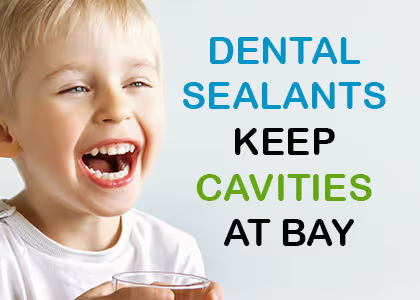
Dental Sealants Keep Cavities at Bay
Dental sealants are a proactive tool in preventing cavities in children. Here's how they work and who should get them.
August 27, 2020
Questions to Ask at a Back-to-School Dental Visit
Right before school starts is a good time to schedule your child's regular checkup. Here's what to ask at the appointment.
August 13, 2020
This Film Can Wreak Havoc on Your Child's Smile
We're not talking about a movie, but a hardened substance on your child's teeth called tartar or calculus. Plaque + Time = Tartar.
July 27, 2020
Counting Sheep: Sedation Dentistry for Kids
Sedation dentistry has steadily gained popularity due to its effectiveness in reducing anxiety during dental treatments. Is it safe for kids?
July 13, 2020
Help! My Child is Terrified of the Dentist
Here's how to help a child who is afraid of the dentist have a more positive dental experience.
June 27, 2020
Don't Drink That! Choosing Teeth-Friendly Beverages for Kids
Studies found that 43% of children ages two and up had cavities. The beverages kids drink play a role. Here's how to choose teeth-friendly drinks.
June 13, 2020
Smile Safari: An Introduction to Animal Teeth
Explore the fascinating world of animal dental anatomy with your kids. You might be surprised what you find!
May 27, 2020
Can Children Have Gum Disease?
The smallest smiles in your family are as vulnerable to oral health issues as you are. Young ones need help with oral hygiene for years.
May 13, 2020
Oral Hygiene for Families on the Go
Today's families seem to be busier than ever. Here are ideas to make consistent oral hygiene more convenient for busy families.