
Sugar Rush: When Sweet Turns Bitter
You’ve heard it before.Too much sugar is not good for little bodies. Or, more precisely, added sugar is not good for people, big or small. The more we learn about how sugar affects the body, the more we realize that lots of added sugar has many downsides for health. This is particularly true of dental health. Sugar can cause serious problems for tiny teeth. The Rise & Fall A sugar rush is a real thing, and it can be no joke. Sugar is a simple source of energy that the body can use very quickly to make energy. Because the body uses it so quickly, the sugar rush is generally followed by a sugar crash when the body runs out of the high-energy sugar. The human body isn’t the only thing that feeds quickly on the simple sugar. The bacteria in your child’s mouth also like to feed on sugars. When they eat sugary foods or drink high-sugar drinks, the bacteria in their mouth begin to feast. This lets the cavity-causing bacteria grow quickly, making lots more bacteria. A Balancing Act Sugar doesn’t just feed decay-causing bacteria in the mouth. It also changes the pH balance of the mouth. The pH is a way to measure if an environment is acidic, basic (the opposite of acidic), or neutral. Sugar tips the balance of the mouth toward acidic. This is a problem, since the bacteria that cause cavities to grow and thrive in an acidic environment. The acid, in addition to helping the bacteria overgrow, softens the minerals in the tooth enamel. If the acidic environment sticks around instead of returning to neutral soon, the minerals can be washed away instead of reabsorbed. The loss of minerals causes serious damage to the teeth. The demineralized areas are more susceptible to cavities , particularly since the cavity-causing bacteria are present and thriving. Cavities are Only Part of the Damage It’s important to remember that the damage sugar can do to your children’s health goes beyond cavities. Too much sugar can contribute to obesity and diabetes, both of which bring additional risks for oral health. A diet high in refined and added sugars contributes to fat accumulation in the body. Worse still, sugar causes the brain to release dopamine, the feel-good chemical that causes sugar to be addictive. The more sugar your children eat, the more sugar they will want. The more they want, the more damage it can do, both to their overall health and their dental health. Do your children (and yourself) a favor, and limit added sugars in their diet. Their improved health will thank you, even if they aren’t likely to do so themselves.The Side EffectSugar itself does not directly cause the tooth to fail. Rather, it starts a cascade that causes cavities. In that sense, cavities are like a side effect of sugar. Avoid the sugar roller coaster of energy rushes and dives, the acid spikes, and teach your children healthy habits that will serve them well their whole lives. If you have any questions about sugar or anything related to oral health, or would like to schedule a visit with your Roseville dentists, Drs. Jeff and Candy McComb at Explorer Kids Dental, please contact us today to make an appointment. We would be more than happy to help your little one learn the importance of a healthy smile and body.Isn’t that sweet!?The content of this blog is not intended to be a substitute for professional medical advice, diagnosis, or treatment. Always seek the advice of qualified health providers with questions you may have regarding medical conditions. Explorer Kids Dental 920 Pleasant Grove Blvd. #150 Roseville, CA 95678 (916) 269-9777
Share this post
Explore more blogs
October 13, 2020
Why Do We Have Baby Teeth?
Baby teeth, also called deciduous, primary, milk, or lacteal teeth, have many different purposes. Here's why they matter.
September 27, 2020
Science Rules: Fun Crafts & Oral Health Experiments for Kids
Here are fun crafts and oral health science experiments you can do at home to teach kids about dental care.
September 13, 2020
Dental Sealants Keep Cavities at Bay
Dental sealants are a proactive tool in preventing cavities in children. Here's how they work and who should get them.
August 27, 2020
Questions to Ask at a Back-to-School Dental Visit
Right before school starts is a good time to schedule your child's regular checkup. Here's what to ask at the appointment.
August 13, 2020
This Film Can Wreak Havoc on Your Child's Smile
We're not talking about a movie, but a hardened substance on your child's teeth called tartar or calculus. Plaque + Time = Tartar.
July 27, 2020
Counting Sheep: Sedation Dentistry for Kids
Sedation dentistry has steadily gained popularity due to its effectiveness in reducing anxiety during dental treatments. Is it safe for kids?
July 13, 2020
Help! My Child is Terrified of the Dentist
Here's how to help a child who is afraid of the dentist have a more positive dental experience.
June 27, 2020
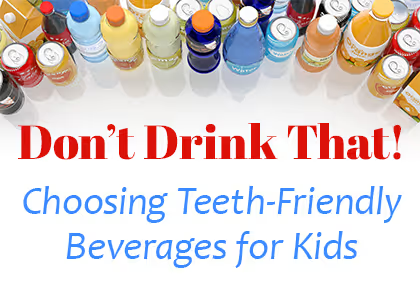
Don't Drink That! Choosing Teeth-Friendly Beverages for Kids
Studies found that 43% of children ages two and up had cavities. The beverages kids drink play a role. Here's how to choose teeth-friendly drinks.
June 13, 2020
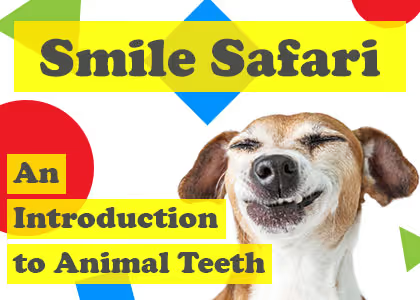
Smile Safari: An Introduction to Animal Teeth
Explore the fascinating world of animal dental anatomy with your kids. You might be surprised what you find!
May 27, 2020
Can Children Have Gum Disease?
The smallest smiles in your family are as vulnerable to oral health issues as you are. Young ones need help with oral hygiene for years.
May 13, 2020
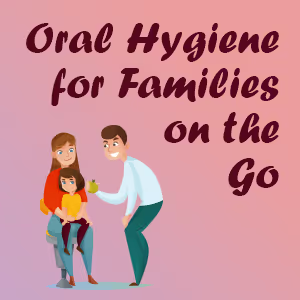
Oral Hygiene for Families on the Go
Today's families seem to be busier than ever. Here are ideas to make consistent oral hygiene more convenient for busy families.