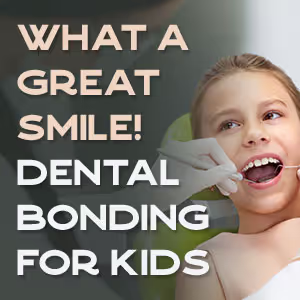
What a Great Smile! Dental Bonding for Kids
Dental bonding is a versatile cosmetic and restorative dental procedure that can be performed on patients of all ages. It can repair damage, fill gaps, and improve the look and structure of teeth. Explorer Kids Dental wants all our patients to enjoy healthy, confident smiles, and if your child faces problems with chipped, misshapen or gapped teeth, your Roseville dentists may recommend bonding treatment.What is the Bonding Procedure?Dental bonding is a treatment where a tooth-colored material is applied directly to the teeth—a composite resin or modifiable ceramic—that restores, rejuvenates, and improves teeth in appearance and function. This minimally invasive same-day dental solution is performed in-office, and rarely requires anesthesia unless it is being used to correct decay. To assist the bonding composite in adhering to the tooth, Dr. Jeff McComb and Dr. Candy McComb roughens the tooth surface and applies a conditioning liquid. Since bonding requires little preparation, the maximum amount of existing tooth structure can be preserved, and the composite resin strengthens and fuses itself to a child’s natural tooth. Tooth-colored resin with a putty-like consistency is color-matched, applied, molded, and smoothed to the desired shape. Once this has been achieved, an ultraviolet (UV) light is used to harden the material. Once the bond has hardened, it is trimmed, shaped, and polished to match the rest of the tooth’s natural sheen. The overall bonding process averages 30-60 minutes per tooth. Is Bonding a Good Solution for My Child? Every child’s dental situation is different. If bonding is being considered purely for aesthetic purposes, you may want to consider factors like how long your child can comfortably sit still and whether the affected tooth will fall out on its own soon. Bonding is often used for pediatric patients in the following situations: To repair decayed, chipped, cracked, or broken teeth To improve the appearance of teeth – close a gap, fix alignment, make tooth shape more uniform To fill in the tooth root area that has been exposed by receding gums As an alternative to amalgam fillings (depending on location in the mouth and extent of decay) How Should Bonded Teeth Be Cared For? Bonded teeth look, feel, and function like natural teeth and should be cared for with a sound oral hygiene routine. Beverages like soda, dark-colored juices, and sports drinks should be avoided whenever possible to prevent staining, and we recommend a custom-fitted mouthguard be used during your child’s active pursuits to prevent damage and injury. Eating ice, biting nails, or chewing pencils and pens chips away at bonding material (and natural teeth!), so if your child has these habits, they should work on curbing them to get the best results from bonding. If your child observes that their bonded tooth suddenly feels “different” or “funny”, ask for details—they could have chipped the bond, in which case you should call us as soon as possible! Will Future Dental Restoration Be Needed? The answer is: most likely. Bonding material isn’t as strong as tooth enamel, but usually lasts several years (about a decade) before it needs repair or renewal. Bonding resin on teeth shows wear over time and can become stained or appear dull with age. Once a child finishes growing, a more permanent restorative procedure like a crown or veneers may be advised.In Summary: Bonding Pros & Cons Pros:Takes an hour or less to apply Less expensive alternative to fillings or other restorations Looks natural – bonding solution is matched to natural teeth Minimally invasive Rarely requires anesthesia Does not reduce natural tooth structure Cons: Can stain or dull over time Easier to break or chip than other restorations Will likely require repair or restoration in the future No one should be able to tell your child has had dental work done—but expect lots of compliments on their bright smile! Contact us today if you have questions or would like to learn more about dental bonding for kids. Explorer Kids Dental looks forward to helping your little one feel confident in their smile. The content of this blog is not intended to be a substitute for professional medical advice, diagnosis, or treatment. Always seek the advice of qualified health providers with questions you may have regarding medical conditions.
Share this post
Explore more blogs
October 13, 2020
Why Do We Have Baby Teeth?
Baby teeth, also called deciduous, primary, milk, or lacteal teeth, have many different purposes. Here's why they matter.
September 27, 2020
Science Rules: Fun Crafts & Oral Health Experiments for Kids
Here are fun crafts and oral health science experiments you can do at home to teach kids about dental care.
September 13, 2020
Dental Sealants Keep Cavities at Bay
Dental sealants are a proactive tool in preventing cavities in children. Here's how they work and who should get them.
August 27, 2020
Questions to Ask at a Back-to-School Dental Visit
Right before school starts is a good time to schedule your child's regular checkup. Here's what to ask at the appointment.
August 13, 2020
This Film Can Wreak Havoc on Your Child's Smile
We're not talking about a movie, but a hardened substance on your child's teeth called tartar or calculus. Plaque + Time = Tartar.
July 27, 2020
Counting Sheep: Sedation Dentistry for Kids
Sedation dentistry has steadily gained popularity due to its effectiveness in reducing anxiety during dental treatments. Is it safe for kids?
July 13, 2020
Help! My Child is Terrified of the Dentist
Here's how to help a child who is afraid of the dentist have a more positive dental experience.
June 27, 2020
Don't Drink That! Choosing Teeth-Friendly Beverages for Kids
Studies found that 43% of children ages two and up had cavities. The beverages kids drink play a role. Here's how to choose teeth-friendly drinks.
June 13, 2020
Smile Safari: An Introduction to Animal Teeth
Explore the fascinating world of animal dental anatomy with your kids. You might be surprised what you find!
May 27, 2020
Can Children Have Gum Disease?
The smallest smiles in your family are as vulnerable to oral health issues as you are. Young ones need help with oral hygiene for years.
May 13, 2020
Oral Hygiene for Families on the Go
Today's families seem to be busier than ever. Here are ideas to make consistent oral hygiene more convenient for busy families.