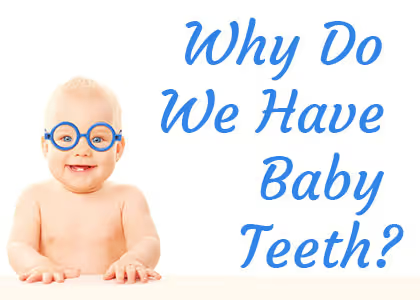
Why Do We Have Baby Teeth?
Baby teeth , also called deciduous, primary, milk, or lacteal teeth, have many different purposes.Drs. Jeff and Candy McComb at Explorer KidsDental is asked the purpose of baby teeth often. So what’s the answer? Tiny Teeth for Tiny Mouths Child-sized mouths are not large enough to accommodate a full set of adult teeth, so the primary teeth become placeholders in the jaw, saving spaces for adult teeth to grow in as they begin to surface from under the gums. Baby teeth usually begin to erupt around 6 months of age, but may begin forming in the womb even before birth! By the age of 3 years, children should have all 20 of their baby teeth, which remain in the mouth for the bulk of childhood—roughly 8-10 years. The presence of baby teeth allows children to eat solid foods and helps as they learn to speak clearly and quickly.They Grow Up So FastThe first adult tooth erupts where the baby teeth have been lost around 6 years of age. By age 13, all permanent adult teeth—except wisdom teeth which tend to emerge between the ages of 17 and 21 years—will have taken up residence in the mouth. Baby teeth are even more prone to cavities than adult teeth because small children lack the dexterity and knowledge to properly care for them. Statistics estimate that more than 50% of kids will be affected by tooth decay before the age of five years. So baby teeth can be very useful tools to educate kids about the importance of good oral hygiene . Premature baby tooth loss can allow permanent teeth to shift into available space in the jaw, causing improper placement and causing further dental problems down the road. Poor dental hygiene in childhood can lead to difficulty speaking and eating, infection, pain, and can affect their overall appearance and self-esteem. Baby teeth will be gone for good by age 12 or 13, but good dental hygiene habits formed in childhood will last a lifetime. If you have any questions about your child’s baby teeth or would like to schedule a hygiene appointment for your little one, please give us a call and
Share this post
Explore more blogs
October 13, 2020
Why Do We Have Baby Teeth?
Baby teeth, also called deciduous, primary, milk, or lacteal teeth, have many different purposes. Here's why they matter.
September 27, 2020
Science Rules: Fun Crafts & Oral Health Experiments for Kids
Here are fun crafts and oral health science experiments you can do at home to teach kids about dental care.
September 13, 2020
Dental Sealants Keep Cavities at Bay
Dental sealants are a proactive tool in preventing cavities in children. Here's how they work and who should get them.
August 27, 2020
Questions to Ask at a Back-to-School Dental Visit
Right before school starts is a good time to schedule your child's regular checkup. Here's what to ask at the appointment.
August 13, 2020
This Film Can Wreak Havoc on Your Child's Smile
We're not talking about a movie, but a hardened substance on your child's teeth called tartar or calculus. Plaque + Time = Tartar.
July 27, 2020
Counting Sheep: Sedation Dentistry for Kids
Sedation dentistry has steadily gained popularity due to its effectiveness in reducing anxiety during dental treatments. Is it safe for kids?
July 13, 2020
Help! My Child is Terrified of the Dentist
Here's how to help a child who is afraid of the dentist have a more positive dental experience.
June 27, 2020
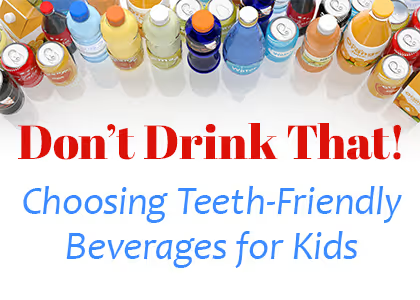
Don't Drink That! Choosing Teeth-Friendly Beverages for Kids
Studies found that 43% of children ages two and up had cavities. The beverages kids drink play a role. Here's how to choose teeth-friendly drinks.
June 13, 2020
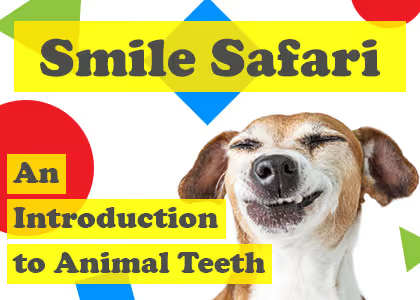
Smile Safari: An Introduction to Animal Teeth
Explore the fascinating world of animal dental anatomy with your kids. You might be surprised what you find!
May 27, 2020
Can Children Have Gum Disease?
The smallest smiles in your family are as vulnerable to oral health issues as you are. Young ones need help with oral hygiene for years.
May 13, 2020
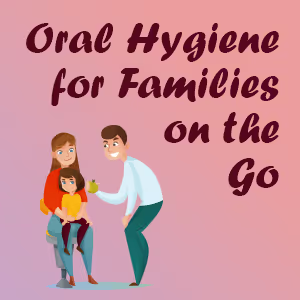
Oral Hygiene for Families on the Go
Today's families seem to be busier than ever. Here are ideas to make consistent oral hygiene more convenient for busy families.