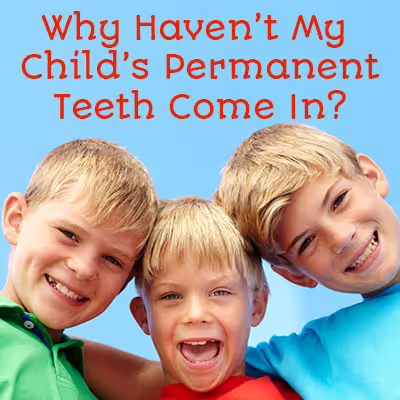
Why Haven't My Child's Permanent Teeth Come In?
If your child’s permanent adult teeth haven’t emerged in a timely manner, you may wonder if there is a reason to worry. Explorer Kids Dental would like to share a few possible reasons permanent adult teeth can be delayed . Is There Enough Space for the New Teeth to Grow? The most common reason for permanent teeth to appear late a simple one: there is just not enough space for them. Adult teeth tend to be larger than the primary baby teeth they replace, and at times, a surrounding tooth (or teeth) may require removal to create extra space. Occasionally, braces also become necessary to facilitate this process.Are Permanent Teeth Facing the Right Direction?Sometimes permanent teeth come through the gums facing the wrong way. This is most common with upper canines and bicuspids. The primary teeth around the affected area may require removal to allow repositioning of teeth that are out of place, and braces are usually required for a permanent solution.GenderThere are wide variations in every aspect of human development, and the rate that teeth grow is no exception. Girls tend to experience puberty changes before boys do, and studies also show that girls begin losing primary teeth up to six months earlier than boys lose theirs. If your firstborn was a girl and your second child was a boy, keep this in mind if you start comparing the rates their teeth develop! Genetics In 80% of cases, kids are going to take after one (or both) biological parents when it comes to their teeth—so if you needed braces or your spouse’s teeth came in late, this could happen to your child, too. There are also congenital conditions present at birth that can cause teeth to be missing. Hypodontia is when six or fewer permanent teeth are absent, and is associated with Down’s syndrome, cleft lip, and cleft palate. Having more than six permanent teeth missing is a condition called oligodontia. If a child is missing multiple adult teeth, consulting with their pediatrician to rule out medical conditions affecting the entire body is a good idea. Since each tooth serves an important purpose in the mouth, when one or more teeth are missing, it can impede the function of the overall mouth structure. Dental implants are the most commonly recommended solution for a missing permanent tooth; bridges can also be an option in certain cases. Orthodontics may also be necessary to reposition any teeth that have shifted into the wrong spot to compensate for the absent ones.NutritionCalcium and other minerals give permanent teeth the strength to push through the gums. If your child is a picky eater, you know that feeding them can be challenging—and what they eat or don’t eat can also affect the development of adult teeth. If essential nutritional components are lacking, dental delays can occur—so you may want to consider dietary changes or supplements to make sure they’re getting the essential nutrients they need.Height & WeightChildren that are heavier and taller typically develop their adult teeth before children that are shorter or have more slender body types. Heavier children, particularly girls, also tend to go through puberty at a younger age, so this goes along with the correlation between gender and earlier appearance of permanent teeth as well. Impacted Teeth If your child lost a baby tooth prematurely—for example, due to injury—the permanent teeth in their mouth may not have room to erupt.A small jaw can also complicate things.These situations can cause impacted teeth, which are teeth trapped in the jawbone that either only partially erupt or fail to emerge at all. Impacted molars are the most common, but other teeth may also become impacted. If children with missing teeth complain of jaw pain, infected or swollen gums, bad breath or recurring headaches, impacted teeth may be the problem. Extraction or oral surgery are possible solutions. Missing Teeth that Never Develop If wisdom teeth come in—and most do by the time a person turns 21—the adult mouth should, in theory, have 32 teeth. If all four wisdom teeth were extracted and no other teeth have been lost, the tally is reduced to 28. However, about 20% of the population has one or more wisdom teeth that just never showed up. Lucky for them! Failure to Launch If there is enough space in the jaw and the teeth are present in the gums but have not erupted, your child may have a rare condition called “primary failure of eruption”. It sounds dire, but the definition is “adult teeth that failed to erupt on their own.” The solution to this condition is typically a combination of oral surgery and braces to “save” the teeth in the jaw and prevent additional complications with neighboring ones. Because multiple teeth are usually involved, correction can take many treatments and several years. Drs. Jeff and Candy McComb will outline a detailed treatment plan to make each step of the process easier to understand. If you have any questions or concerns about your child’s permanent teeth coming in, we would be happy to speak with you.Contact us today !The content of this blog is not intended to be a substitute for professional medical advice, diagnosis, or treatment. Always seek the advice of qualified health providers with questions you may have regarding medical conditions.
Share this post
Explore more blogs

October 27, 2022
5 Easy-to-Make Halloween Snacks for Healthy Teeth
Halloween means class parties, trick or treating, and an all-around day full of sugar. There are plenty of healthy and fun ways to celebrate.
October 13, 2022
Pediatric Oral Health FAQ
The Explorer Kids Dental team knows parenting is equal parts rewarding and exhausting. Here are answers to frequently asked questions about pediatric oral health.
September 27, 2022
Does My Child Need a Dental Crown?
Baby teeth are important because they save space for adult teeth and help kids learn to speak, bite, and chew. Sometimes dental crowns are needed.
September 13, 2022
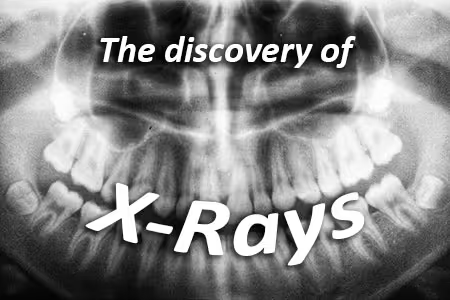
The Discovery of X-Rays
X-rays are now so frequently used we take them for granted. Here's the fascinating story of their discovery and use in dentistry.
August 27, 2022
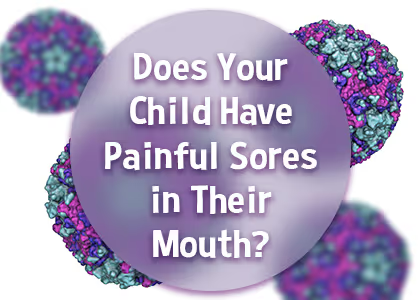
Does Your Child Have Painful Sores in Their Mouth? This Virus Could be the Cause
Have you heard of Hand, Foot, and Mouth Disease? Despite being a relatively common virus, it's one that makes a lot of parents confused.

August 13, 2022
Benzocaine is Not Safe for Teething!
Benzocaine has been an over-the-counter local dental anesthetic for many years but its use has been linked to a rare but serious condition.

July 27, 2022
Ages & Stages: Kids & Oral Hygiene
At-home oral hygiene routines are the most effective tool but tricky with pediatric patients. Here's what to do at each age.
July 13, 2022
Does Your Child or Teen Experience Chronic Headaches? Chewing Gum Might be to Blame
There are a lot of myths about chewing gum. Explorer Kids Dental wants to clear up whether chewing gum can cause chronic headaches in kids and teens.
June 27, 2022
Lidocaine is Not for Kids
The FDA issued a warning that oral viscous lidocaine should not be used to treat teething pain in infants and young children.
June 13, 2022
A Dental First Aid Kit for Kids
With active kids who run, play, and climb, emergency dental injuries can happen. Here's what to include in a dental first aid kit.
May 27, 2022
This Tool Can Help Your Child Floss Like a Boss!
Getting string in between a child's teeth is a challenge. Explorer Kids Dental shares a helpful flossing tool for kids.