
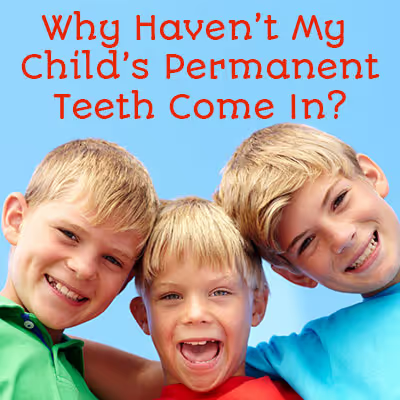
Why Haven't My Child's Permanent Teeth Come In?
If your child’s permanent adult teeth haven’t emerged in a timely manner, you may wonder if there is a reason to worry. Explorer Kids Dental would like to share a few possible reasons permanent adult teeth can be delayed . Is There Enough Space for the New Teeth to Grow? The most common reason for permanent teeth to appear late a simple one: there is just not enough space for them. Adult teeth tend to be larger than the primary baby teeth they replace, and at times, a surrounding tooth (or teeth) may require removal to create extra space. Occasionally, braces also become necessary to facilitate this process.Are Permanent Teeth Facing the Right Direction?Sometimes permanent teeth come through the gums facing the wrong way. This is most common with upper canines and bicuspids. The primary teeth around the affected area may require removal to allow repositioning of teeth that are out of place, and braces are usually required for a permanent solution.GenderThere are wide variations in every aspect of human development, and the rate that teeth grow is no exception. Girls tend to experience puberty changes before boys do, and studies also show that girls begin losing primary teeth up to six months earlier than boys lose theirs. If your firstborn was a girl and your second child was a boy, keep this in mind if you start comparing the rates their teeth develop! Genetics In 80% of cases, kids are going to take after one (or both) biological parents when it comes to their teeth—so if you needed braces or your spouse’s teeth came in late, this could happen to your child, too. There are also congenital conditions present at birth that can cause teeth to be missing. Hypodontia is when six or fewer permanent teeth are absent, and is associated with Down’s syndrome, cleft lip, and cleft palate. Having more than six permanent teeth missing is a condition called oligodontia. If a child is missing multiple adult teeth, consulting with their pediatrician to rule out medical conditions affecting the entire body is a good idea. Since each tooth serves an important purpose in the mouth, when one or more teeth are missing, it can impede the function of the overall mouth structure. Dental implants are the most commonly recommended solution for a missing permanent tooth; bridges can also be an option in certain cases. Orthodontics may also be necessary to reposition any teeth that have shifted into the wrong spot to compensate for the absent ones.NutritionCalcium and other minerals give permanent teeth the strength to push through the gums. If your child is a picky eater, you know that feeding them can be challenging—and what they eat or don’t eat can also affect the development of adult teeth. If essential nutritional components are lacking, dental delays can occur—so you may want to consider dietary changes or supplements to make sure they’re getting the essential nutrients they need.Height & WeightChildren that are heavier and taller typically develop their adult teeth before children that are shorter or have more slender body types. Heavier children, particularly girls, also tend to go through puberty at a younger age, so this goes along with the correlation between gender and earlier appearance of permanent teeth as well. Impacted Teeth If your child lost a baby tooth prematurely—for example, due to injury—the permanent teeth in their mouth may not have room to erupt.A small jaw can also complicate things.These situations can cause impacted teeth, which are teeth trapped in the jawbone that either only partially erupt or fail to emerge at all. Impacted molars are the most common, but other teeth may also become impacted. If children with missing teeth complain of jaw pain, infected or swollen gums, bad breath or recurring headaches, impacted teeth may be the problem. Extraction or oral surgery are possible solutions. Missing Teeth that Never Develop If wisdom teeth come in—and most do by the time a person turns 21—the adult mouth should, in theory, have 32 teeth. If all four wisdom teeth were extracted and no other teeth have been lost, the tally is reduced to 28. However, about 20% of the population has one or more wisdom teeth that just never showed up. Lucky for them! Failure to Launch If there is enough space in the jaw and the teeth are present in the gums but have not erupted, your child may have a rare condition called “primary failure of eruption”. It sounds dire, but the definition is “adult teeth that failed to erupt on their own.” The solution to this condition is typically a combination of oral surgery and braces to “save” the teeth in the jaw and prevent additional complications with neighboring ones. Because multiple teeth are usually involved, correction can take many treatments and several years. Drs. Jeff and Candy McComb will outline a detailed treatment plan to make each step of the process easier to understand. If you have any questions or concerns about your child’s permanent teeth coming in, we would be happy to speak with you.Contact us today !The content of this blog is not intended to be a substitute for professional medical advice, diagnosis, or treatment. Always seek the advice of qualified health providers with questions you may have regarding medical conditions.
Share this post
Explore more blogs
April 27, 2022
Can My Child's Asthma Affect Their Dental Health?
More than 26 million Americans have asthma, and it's the leading chronic disease in children. Here's how asthma might affect your child's oral health.
April 13, 2022
Could the HPV Vaccine Decrease My Child's Risk of Oral Cancer?
At Explorer Kids Dental, we may broach sensitive subjects around the ages of 11 and 12, when doctors might recommend the HPV vaccine.
March 27, 2022
What's the Right Amount of Fluoride for Your Child's Teeth?
We know you want your child to love their smile, which is why we're always happy to inform you about the right amount of fluoride.

March 13, 2022
Kids, Candy & Dental Health
Holidays bring extra candy along with them. The bacteria in your child's mouth are always ready to start producing acid that contributes to cavities.
February 27, 2022
Special Needs Dentistry: Everyone Deserves a Healthy Smile!
Everyone deserves quality dental care. Here's how Explorer Kids Dental serves patients with special needs.

February 13, 2022
Questions to Ask Before Special Needs Kids See the Dentist
Sometimes special needs kids have higher anxiety in new situations like visiting the dentist. Here are questions to ask to prepare for a successful visit.
January 27, 2022
How Baby Teeth Help Mouths Grow Up Right
Baby teeth play a crucial role in oral development. Here's why they matter more than you might think.
January 13, 2022
TruDenta® – Truly Life-Changing Dentistry
TruDenta is a drug-free dental pain management system proven to help provide relief from chronic headaches, tinnitus, vertigo, and TMJ dysfunction.

December 27, 2021
Baby Bottles & Water: It's Complicated
Water is the healthiest beverage for kids and adults, but in babies less than six months of age, water is a no-no.

December 13, 2021
Does Your Child Suffer from Bruxism?
Bruxism is the dental term for teeth grinding and jaw clenching, a habit that children and adults can develop, often without being conscious of it.

November 27, 2021
Life Hacks: One Simple Way to Protect Your Child's Smile
Sports-related injuries are the leading cause of emergency room visits for children and teenagers ages 12-17. A simple mouth guard can protect their smile.