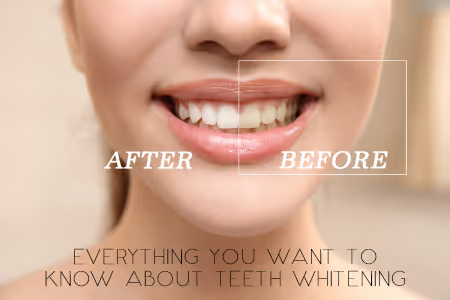
Everything You Want to Know About Teeth Whitening
Are you considering teeth whitening before a big event? Do you want to have a smile that is the star of your wedding? Teeth whitening is a popular cosmetic procedure and can boost confidence, eliminate stubborn stains, and give you a look that really shines. However, like any dental procedure, it’s important to understand why your teeth are stained in the first place, what teeth whitening is like, and finally, how to prolong the results of professional teeth whitening. If you’d like to book a consult now, reach Explorer Kids Dental here. Common Causes of Teeth Staining A column in TuftsNow by clinical professor Ronald Perry outlines some common causes of extrinsic staining, or staining of the enamel: Black tea Coffee Wines, red and white Dark-colored food (beets, chocolate) Berries Popsicles Candy Pickles Soy sauce Curry Smoking The good news about extrinsic stains is we can treat them with teeth whitening and proper brushing and flossing. There are also ways Dr. Perry suggests you mitigate staining agents. He advises drinking dark liquids through a straw to avoid contact with the teeth, brush and floss after consuming food and drink, chewing sugarless gum, and finally eating a diet high in fiber. However, if your efforts to mitigate staining have started too late, he suggests teeth bleaching as a good option to eliminate extrinsic stains. What are My Options for Teeth Whitening? We’re all familiar with the over-the-counter teeth whitening strips. While convenient, there is the danger of falling into the ‘more is better’ trap, explained by Dr.Adam S. Harwood, DMD in Dentistry Today.The idea that adding more peroxide, charcoal, or other trendy solution to your at home regimen will cause whiter teeth, isn’t necessarily the case.Too much of anything can be damaging.Professional teeth whitening is a safer and more predictable option. There are several brands of professional whitening, but most fall into two categories: In office and at home solutions. In office whitening If you choose an in-office approach, you will choose the level of whiteness you wish your teeth to reach with your dental provider. They will then prep your teeth and gums for safe application of the specially formulated whitening gel. Some offices will then shine a special activation light on the gel to speed up whitening, others don’t. When your whitening session is complete, the gel is cleaned off and a topical anti-sensitivity product applied. We send you on your way with instructions for avoiding certain food and drinks to maintain your new bright smile. At home professional teeth whitening If you prefer to whiten in the comfort of your own home, your dentist will fit you for professional plastic whitening trays. Then they will provide prescription-strength gel to fill the trays and wear at home. Depending on the solution, you may wear the trays several days in a row, or for a few days a month until you reach your desired shade. At-home whitening can be a great way to whiten your teeth on your schedule.What Your Dentist Wants You to KnowTeeth whitening under the supervision of your dentist is ideal. You can get a bright white smile that is also healthy. You will also get professional recommendations on how to maintain your results, and most dentists will also provide at-home touch up options to keep your smile bright between visits. If it interests you to whiten your teeth or you have questions, please reach out!Contact Explorer Kids Dental .The content of this blog is not intended to be a substitute for professional medical advice, diagnosis, or treatment. Always seek the advice of qualified health providers with questions you may have regarding medical conditions.
Share this post
Explore more blogs
October 13, 2020
Why Do We Have Baby Teeth?
Baby teeth, also called deciduous, primary, milk, or lacteal teeth, have many different purposes. Here's why they matter.
September 27, 2020
Science Rules: Fun Crafts & Oral Health Experiments for Kids
Here are fun crafts and oral health science experiments you can do at home to teach kids about dental care.
September 13, 2020
Dental Sealants Keep Cavities at Bay
Dental sealants are a proactive tool in preventing cavities in children. Here's how they work and who should get them.
August 27, 2020
Questions to Ask at a Back-to-School Dental Visit
Right before school starts is a good time to schedule your child's regular checkup. Here's what to ask at the appointment.
August 13, 2020
This Film Can Wreak Havoc on Your Child's Smile
We're not talking about a movie, but a hardened substance on your child's teeth called tartar or calculus. Plaque + Time = Tartar.
July 27, 2020
Counting Sheep: Sedation Dentistry for Kids
Sedation dentistry has steadily gained popularity due to its effectiveness in reducing anxiety during dental treatments. Is it safe for kids?
July 13, 2020
Help! My Child is Terrified of the Dentist
Here's how to help a child who is afraid of the dentist have a more positive dental experience.
June 27, 2020
Don't Drink That! Choosing Teeth-Friendly Beverages for Kids
Studies found that 43% of children ages two and up had cavities. The beverages kids drink play a role. Here's how to choose teeth-friendly drinks.
June 13, 2020
Smile Safari: An Introduction to Animal Teeth
Explore the fascinating world of animal dental anatomy with your kids. You might be surprised what you find!
May 27, 2020
Can Children Have Gum Disease?
The smallest smiles in your family are as vulnerable to oral health issues as you are. Young ones need help with oral hygiene for years.
May 13, 2020
Oral Hygiene for Families on the Go
Today's families seem to be busier than ever. Here are ideas to make consistent oral hygiene more convenient for busy families.